
Most homeowners think of maintenance and improvement as two separate categories. Maintenance is the routine work that keeps things from breaking, while improvement is the exciting project that changes how a home looks or functions. In practice, the line between them is thin. Every time a worn component is replaced, a better one can take its place. Every time a problem area is opened up for repair, it can be rebuilt to a higher standard. Routine care, approached with intention, becomes a steady path toward a stronger, more comfortable, and more valuable property.
Turning everyday maintenance into lasting improvement starts with looking at each task as an opportunity. Regrading planting beds can redirect runoff while lowering water use. Replacing a failed shower pan can bring a dated wet room up to modern standards. Swapping out an aging tank can deliver endless hot water, and replacing worn shingles or panels can improve efficiency and curb appeal. When each repair is treated as a chance to upgrade, the home steadily becomes safer, more efficient, and easier to live in, and those gains compound year after year.
Regrading Foundation Beds and Planting Drought-Tolerant Natives

Planting beds along the foundation often create more problems than they solve. Over the years, mulch and soil build up against siding, burying weep screeds and giving insects a hidden path into wall cavities. Beds that slope toward the house funnel rainwater against the foundation, saturating crawlspaces and basements. Thirsty, non-native shrubs require frequent watering that keeps soil wet near the structure, while overgrown plantings crowd walkways and windows and add to routine pruning chores.
A thoughtfully planned landscape turns this routine bed maintenance into a lasting upgrade. Beds are regraded so soil slopes away from the foundation at about six inches over the first ten feet, with mulch kept several inches below siding. Drought-tolerant native shrubs, perennials, and grasses adapted to local soil and rainfall replace thirsty plantings and are spaced a few feet from the walls to allow airflow. Drip irrigation delivers water directly to roots, and downspouts are tied into buried pipes or dry creek beds that carry runoff away. Edging and a fresh layer of shredded hardwood mulch finish beds that need far less weekly attention.
Dismantling Decayed Trunks and Grinding Leftover Stumps
Mature specimens add shade and character, but routine pruning eventually reveals problems that pruning alone cannot fix. Internal decay hollows trunks while the canopy may still look full, and cavities, fungal conks at the base, oozing cracks, and dead branches in the crown signal weakening wood. A decayed trunk standing near the house, driveway, or power lines can fail suddenly during storms, while leftover stumps from earlier work become tripping hazards and attract termites as they rot.
Experienced tree removal companies begin with an arborist’s assessment of decay, lean, and nearby targets, sometimes using resistance drilling to measure how much sound wood remains. Climbers rig and lower each section with ropes and friction devices, while cranes lift heavy pieces over structures in tight spaces. Stumps and major surface roots are ground eight to twelve inches below grade, debris is chipped and hauled away, and the area is backfilled with topsoil, creating space for new plantings, patios, or play areas that improve how the yard is used.
Planning Curbless Showers and Specifying Moisture-Resistant Finishes
Wet rooms often reach a point where routine repairs, such as regrouting tile or recaulking a tub, no longer keep water out. Older showers built over drywall or unsealed backer board absorb moisture through every hairline crack, rotting studs and subfloors. High tub walls and slippery surfaces create fall risks, especially for older family members and young children, and inadequate ventilation lets steam linger, peeling paint and feeding mildew.
Thoughtful bathroom design turns a necessary repair into a lasting upgrade. Layouts are planned around how the household uses the space, often replacing tubs with curbless walk-in showers that feature linear drains set flush with the floor and surfaces sloped about a quarter inch per foot. Continuous waterproofing membranes cover floors and walls, and finishes are specified for moisture resistance, including porcelain tile, quartz vanity tops, mold-resistant drywall, and catalyzed cabinet coatings. Grab bar blocking and ducted exhaust fans with humidity controls complete the room. The result is a space that is safer, easier to clean, and built to resist water for decades.
Resealing Lifted Shingles and Replacing Cracked Pipe Boots
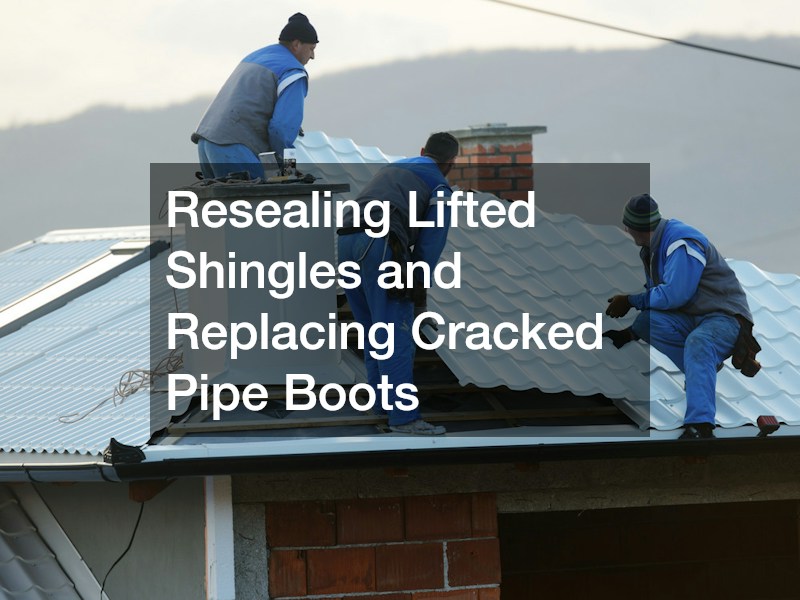
Two of the most common sources of slow leaks are easy to miss from the ground. Wind breaks the adhesive strips that hold shingle tabs in place, and once a tab lifts, every storm drives water beneath it toward the nail line and decking. Plumbing vent pipes passing through the deck are sealed by rubber boots that dry out and crack after years of ultraviolet exposure, opening a gap that channels water straight down the pipe into the attic and wall cavities.
A trusted roofer inspects the entire surface and every penetration, resealing lifted tabs with asphalt roofing cement and replacing creased or torn shingles with matching material fastened with ring-shank nails. Cracked rubber boots are upgraded to silicone, lead, or multi-piece collar flashings that resist UV breakdown far longer, set beneath the upslope shingles so water sheds properly. Exposed nail heads are sealed, damaged decking is replaced, and attic ventilation is checked so the shingles stay cooler and last longer.
Measuring Sludge Layers and Replacing Corroded Baffles
Routine service of a buried wastewater tank is one of the most important and most overlooked maintenance tasks. Solids settle as sludge, grease and soap rise as scum, and the clear effluent between them flows out to the drainfield. When the tank goes too long without service, solids escape into the field and clog the soil, causing slow drains, odors, and soggy areas. Concrete baffles corrode from hydrogen sulfide gas and eventually fail, allowing scum to pass directly into the distribution lines.
Regular septic pumping begins with locating and exposing the access lids, then measuring sludge and scum depths to determine how quickly the tank is filling. The tank is pumped completely through the main lid, and technicians inspect the tank walls, inlet and outlet baffles, and effluent filter. Corroded concrete baffles are upgraded to PVC sanitary tees that resist corrosion, effluent filters are added or cleaned, and risers are installed to bring lids to grade, making every future visit faster, cleaner, and less disruptive to the yard.
Tracing Hidden Leaks and Replacing Seized Shutoff Valves
Supply lines run hidden through walls, floors, and slabs, and their failures often go unnoticed until damage is extensive. Pinhole leaks in copper, corroded galvanized pipe, and loose fittings soak framing and subfloors, feed mold, and raise water bills. Older multi-turn shutoff valves under sinks and toilets and at the main supply corrode and seize from mineral buildup, leaving homeowners unable to stop the flow when a leak finally appears.
A skilled local plumber traces hidden leaks with acoustic listening equipment, thermal imaging, and isolation pressure tests that pinpoint the failure before walls or floors are opened. Damaged sections are replaced with PEX-A tubing and cold-expansion fittings or Type L copper, and corroded runs are rerouted through attics or interior walls where slabs are involved. Seized valves are upgraded to quarter-turn ball valves and braided stainless steel connectors, and a pressure-reducing valve and smart leak detector with automatic shutoff add lasting protection.
Sizing On-Demand Units and Venting Condensing Burners

Replacing a failing storage tank is often treated as a like-for-like swap, but it is an ideal moment to upgrade. Traditional tanks keep dozens of gallons hot around the clock, losing energy through standby heat loss, and busy households often run out during back-to-back showers. Sediment buildup reduces efficiency and shortens tank life, and a failed tank can release dozens of gallons onto the floor.
Experienced water heater installers begin by calculating peak flow demand in gallons per minute and the required temperature rise based on incoming groundwater temperature, then size an on-demand unit to match. Gas lines are evaluated and upsized when needed to handle high BTU input. Condensing models vent through sealed schedule-40 PVC or polypropylene, with condensate routed through a neutralizer. Isolation valves allow annual descaling, protecting the heat exchanger from mineral buildup and delivering continuous hot water with lower operating costs.
Sealing Foundation Gaps and Treating Hidden Nesting Sites
Routine inspections for insects and rodents offer a chance to fix the structural gaps that let them in. Cracks in foundation walls, gaps around utility penetrations, torn vent screens, and worn door sweeps provide easy access, while mulch piled against siding gives insects a sheltered pathway into wall cavities. Once inside, rodents nest in attics and crawlspaces, chewing wiring and contaminating insulation, while ants, roaches, and termites spread quietly through voids and framing.
Effective pest control begins with a full inspection of the foundation, crawlspace, attic, and utility penetrations, tracing droppings, trails, and moisture readings back to their sources. Gaps are permanently sealed with copper mesh, hardware cloth, metal flashing, and durable sealants, and damaged vent screens and door sweeps are replaced. Hidden nesting sites are treated with targeted baits, dusts, and growth regulators placed directly in voids and harborages, while a non-repellent perimeter treatment intercepts new arrivals. Crawlspace vapor barriers and moisture corrections keep conditions unfavorable long-term.
Feeding Nutrient-Starved Turf and Correcting Soil pH Levels
Turf that looks thin, pale, or patchy is often starving for nutrients or growing in soil with the wrong chemistry. Nitrogen drives leaf growth and color, phosphorus supports root development, and potassium strengthens resistance to drought, disease, and foot traffic. When soil pH drifts too far toward acidic or alkaline, those nutrients become locked in the soil, unavailable to roots. Weak turf thins out, weeds move in, and bare soil erodes during heavy rain.
Consistent lawn fertilization begins with a soil test that measures pH, organic matter, and nutrient levels. Lime is applied to raise acidic soil, while sulfur lowers alkaline soil, bringing pH into the range most turf grasses prefer. Slow-release nitrogen feeds steadily without burning or encouraging excessive top growth, and applications are timed to match active growing periods. Calibrated spreaders deliver even coverage, and pairing feedings with proper mowing height and deep, infrequent watering builds dense turf that resists weeds year after year.
Hanging Insulated Overhead Panels and Balancing Torsion Springs

When an overhead entry needs new springs or panels, the repair can become a meaningful upgrade. Thin, uninsulated steel panels transfer heat and cold into the attached space and adjacent rooms, and worn weatherseals let in drafts, water, and pests. Springs lose tension over thousands of cycles, leaving panels unbalanced and forcing openers to strain, and dented or faded panels detract from the home’s curb appeal.
Professional garage door installers replace outdated panels with insulated steel or composite models featuring polyurethane foam cores and high R-values that dramatically reduce heat transfer. New tracks, rollers, and hinges are installed and aligned, and torsion springs are sized to the panel’s weight and height, installed in matched pairs, and wound to the correct tension so the panel balances on its own. Perimeter and bottom weatherseals block drafts and pests, and safety sensors and auto-reverse functions are tested before use. A modern belt-drive opener with rolling-code security and battery backup completes an upgrade that improves comfort, safety, and curb appeal at once.
Every maintenance task is an opportunity to leave the home better than it was before. Regraded beds and native plantings reduce water use and keep the foundation dry. Removing hazardous specimens opens space for new uses. Rebuilt wet rooms, upgraded shingle flashings, corrosion-resistant baffles, modern shutoff valves, on-demand hot water, permanent pest exclusion, healthier turf, and insulated overhead panels all replace worn components with better ones.
The key is approaching routine work with an eye toward improvement. When a system needs attention, it pays to consider whether a more efficient, durable, or safer option makes sense. Scheduling seasonal inspections, keeping records of repairs and upgrades, and planning larger projects in phases spread costs over time while steadily raising the quality of the home.
The result is a property that gets better each year instead of slowly wearing out. Utility costs drop, comfort rises, safety improves, and the home’s value grows. By turning everyday maintenance into lasting improvement, homeowners create a place that serves their household well for decades.